A Successful Franchise Exit and The Path To Financial Freedom

As I explained in a previous blog post, the Legacy Builder phase is the ultimate place to be for a Franchisee, because that’s when they have enough units and cash flow to have District Managers oversee the business, allowing them to enjoy time freedom and live a financially free life.
But there’s another stage that occurs when Franchisees decide to exit the franchise system, either by passing it on to their family or children or by selling to a third party.
Ken Blum is there, and he’s loving it. This former Dunkin’ Franchisee built a 31-unit enterprise and decided to exit after 15 years. I invited him to our Franchisee Wisdom Podcast so he could share his journey from banker to Multi-Unit Franchisee to retired business owner, and the lessons he learned along the way.
The conversation was not only inspiring but also filled with powerful insights for anyone who wants to grow their business, nurture a good partnership, and succeed.
But first, subscribe to our YouTube channel and Podcast, and follow us on our social platforms.
From Banking to Franchisee
Ken comes from a family of entrepreneurs, so joining the family tire business was always an option for him to start his professional life. However, his older brother was already involved in operations, and working at a tire company wasn’t exactly what he had in mind as a new graduate with a double major in Finance & Investments from Babson College.
He applied for many jobs before joining a local bank in Central Massachusetts, where he began as a credit analyst. Over time, he was promoted to junior lender and assigned a few small-house accounts.
Curiously enough, three of them were Dunkin' Donuts Franchisees, and all of them were related by marriage. The years went by, and those owners scaled their multi-unit franchise enterprise throughout New England, and every time they opened a new location, they reached out to Ken to get a new loan. This made the Dunkin’ account a major part of Ken’s loan business. It grew so large that he even had to create a specialty lending group just for them.
After 19 years in commercial banking, having worked his way up to Senior Vice President, with people reporting to him in Chicago, Dallas, and New Jersey, Ken decided to leave the corporate world in December 2006. The reason? To become a Franchisee, partnering with John Batista, one of the original Dunkin’ Franchisees he worked with, and also one of the biggest franchisees in central Massachusetts.
The Decision to Become a Franchisee
When Ken first started in banking, he didn't know or understand his clients’ businesses. Thankfully, his portfolio wasn’t huge, so he made a genuine effort to learn about their business and also about the franchise industry.
“Most bankers have an intellectual curiosity to learn, or at least I did. I wanted to listen to their business. I wanted to learn their business and understand what my borrowers needed to be successful.”
He took it even further. He actually went and saw the units by himself, which is something I’ve never heard of.
“Before, this was considered like a 'know-your-business' strategy. I used to love going out on tours and spending days with my customers, driving all over and seeing the new locations my Dunkin’ franchisees were opening.”
He even confessed that this was one of the compelling points he used when selling his wife on the idea of giving up his banking career to become a Franchisee. “I told her this would be a lot less travel. It turned out that wasn't true, but I was sincere when I said it”, he recalled.
This wasn’t the first time Ken had explored franchising, and it wasn’t a well-kept secret. Before this experience, he attempted to buy existing stores twice—once near Albany, New York, and later in Connecticut—but both deals ultimately fell through.
The turning point came from John’s Rochester District Manager, Lewis. They had spent some days together at a convention in Las Vegas, and the conversation had turned very honest between them.
“I told him how I was really jealous of him, seeing the success they all had in the franchise business, and how I had tried before to become a franchisee, but it didn’t work. He just looked at me and asked if I was still thinking of being a Franchisee. I was like, ‘Yeah, but the window's closing for me. My kids are getting older, and it'll be harder to relocate my family”.
What Ken didn’t know was that Lewis had already spoken with John because they were looking to expand into the Cleveland market, which the brand was refranchising. Soon after, Ken received a visit from the Franchisee, who made him an offer.
“He basically said to me: Do you want to do something small on your own, and I'll help you out any way I can, or do you wanna do something bigger and partner up?”
After talking with his wife and agreeing that this would be a good opportunity for the family, the couple responded to John, “Let’s do something big!” And he did, but not directly with him, but with his two oldest sons-in-law, Rob and Matt.
In July 2007, the family moved to Cleveland. In November, Ken and his wife opened their first store out of the 23 units they had negotiated with the brand.
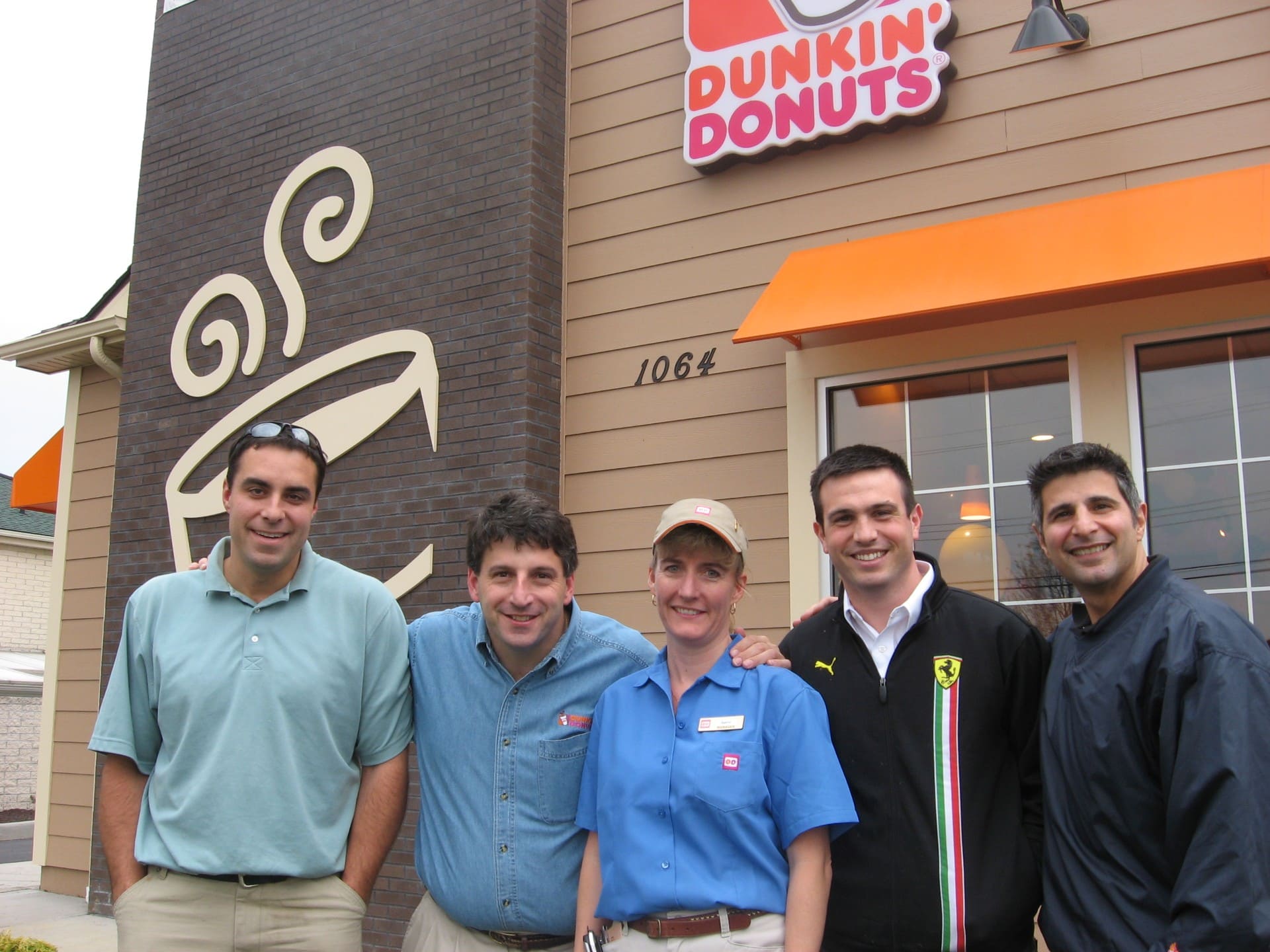
Ken Blum and his franchise business partners
A True Partnership
Before Dunkin’, Ken’s wife was a stay-at-home mom. She was also an embedded member of her community, serving on the school committee, a library fundraising committee, and the YMCA board. But when they discussed whether to accept the franchise opportunity in front of them, he firmly said:
“If we do Dunkin’, it's not me doing Dunkin’, it's we doing Dunkin’. We have to do this together.”
First, she got involved in operations and started working at one of John’s stores while they were negotiating their franchise deal, taking overnight shifts. This helped her learn and truly understand the business from the inside, which paid off later when they were running their units.
“She would be in the stores every day running the operations, which allowed me to have more time to focus on development. I knew my wife was great, but wow! She was a lot of the secret sauce for our success from an operational standpoint”.
I love that they were the yin to the yang. She focused on the operational and relationship side, spending time with team members and the front line. At the same time, he worked in the back of the house, handling development, growth, strategy, capital management, and all of that.
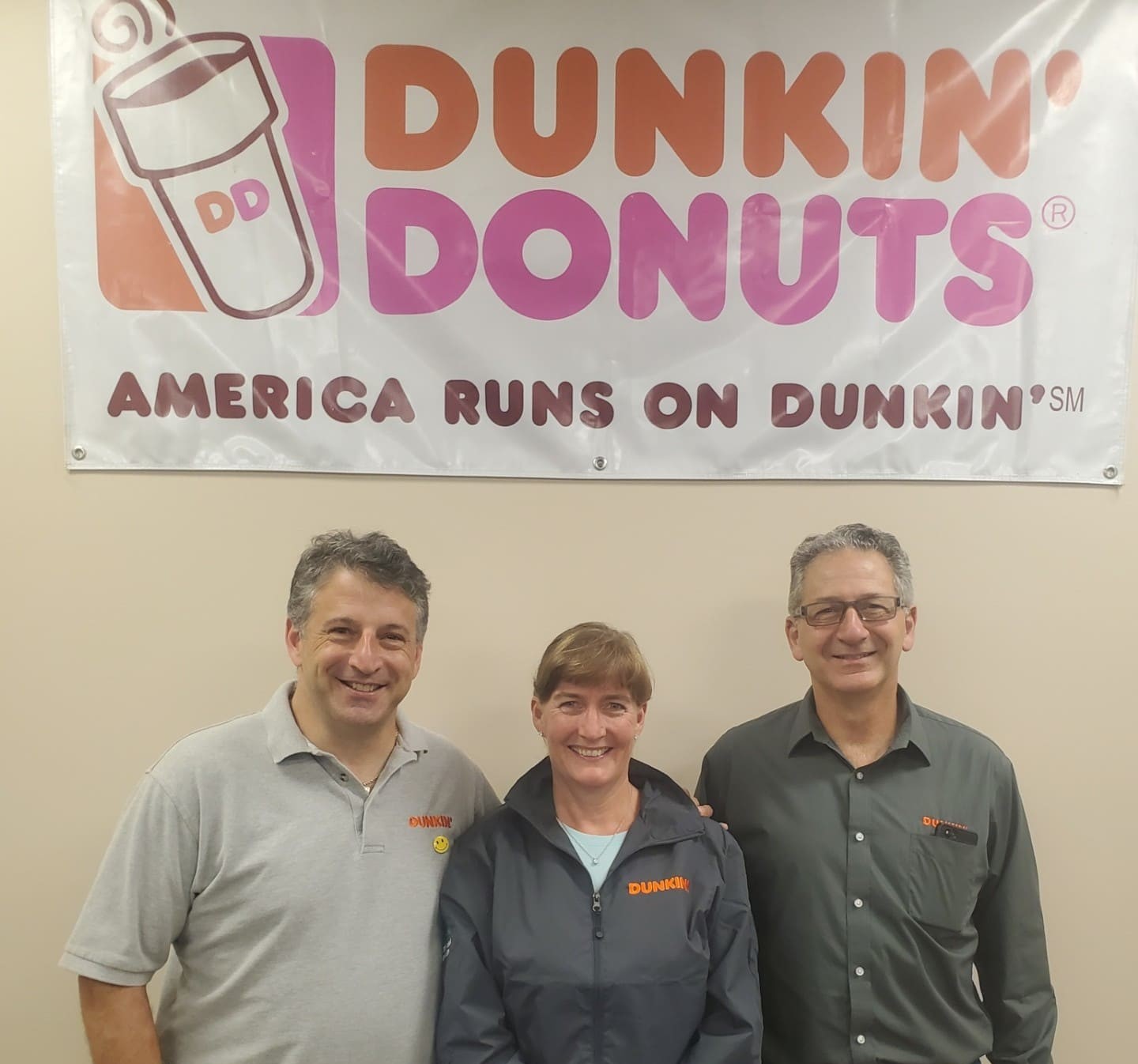
Ken, his wife, and partner Bob Blum
Not all franchises have that; many operate solo, so the fact that they decided to partner and go into business together, making the most of their specific skills, is really amazing.
“It was important for our marriage, too, that we had to find our own lanes. I stepped on her toes a few times and learned some lessons the hard way because sometimes I just can't help but say what is going through my brain. But I quickly learned that when it came to operations, I had to rely on her because her instincts were spot on.”
The First Franchise Unit: Surprises, Challenges & Lessons
Ken had banked Dunkin’ for 19 years, and he thought he knew a lot about the business. It turns out he didn’t.
“I had never built anything and dealt with stuff like construction, electrical & plumbing inspectors, contractors... And at the same time, there was pressure from the brand to open the store, but we kept getting delayed. It was exceptionally stressful. Thankfully, I had partners who took the lead on getting the store built and teaching me along the way, while my wife and I focused more on the operational side and getting the store open.”
The experience taught him some valuable lessons for his future store openings, including:
- Even though there’s a timeline for how everything should happen, you have to plan for the unexpected.
- Even so, you still have to push to do it as fast as possible, because time is money.
- You have to plan the grand opening well in advance (two whole weeks is not enough!).
- The benefit of slowing down instead of hiring the whole crew too far in advance.
“Our opening got delayed by two weeks. Our employees were hired, trained, and ready, but they couldn’t start working. We paid them, of course, but some stopped taking it seriously and lost focus.” - It’s better to do soft openings and then do the big grand opening. This will help you get your crew trained when it's not crazy busy. By the way, this also helps with retention because the employee experience is much more positive.
Building a Multi-Unit Enterprise
From the beginning, he knew he wanted to have a big multi-unit organization. Otherwise, he would have tried to do it on his own, without John’s partnership. When he became a Dunkin’ Franchisee, he negotiated to open 23 stores over eight years.
When he sold the business in 2022, he had 31 locations open, plus two that were relatively new, and a couple that were still in development. Yes, they could’ve grown faster; however, as he explained, their goal was not to grow fast but to grow smart.
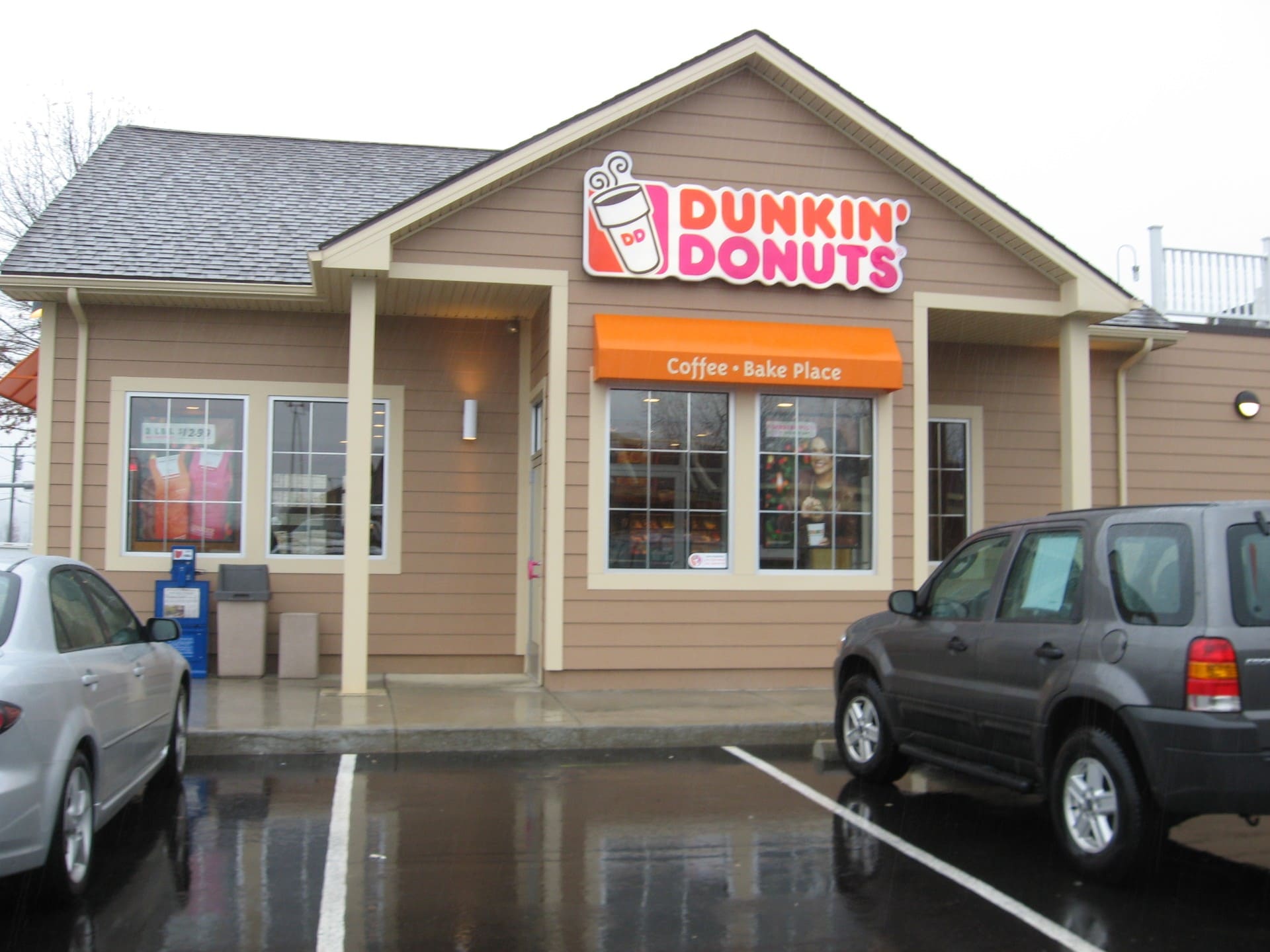
“Some years, we did one unit. Others, we did four units. Most years, it was two or three. Some would say we were too conservative, others would say we were too aggressive. But good managers just don't grow on trees, and good District Managers are even harder to find, and we just didn't want to overstress the system at the expense of fast growth.”
All in all, he said, some things eased the stress on one level, but on another level, they just multiplied his problems.
His #1 challenge during his 15-year Franchisee journey was certainly talent acquisition. He admitted that he never experienced those “good old days” when hiring great staff or leaders for a store felt easy. He even shared that, instead of hiring a manager, Ken, his wife, and his brother (who later joined as a partner) took turns running the first stores. Ken was even a baker at their first store!
Around store number three was the worst because they were not only the Franchisees, but also the managers, District Managers, operators, and the “jack of all trades”. I call this phase “the Hell zone”, which happens between the second store and the first District Manager area. I call it like this because Franchisees basically have three jobs or more at times, which is just hell.
It started to get better around store #10, Ken said, because that’s when they were able to have two multi-unit leaders to help open up stores and oversee the units. However, they never really stopped paying attention to operations.
“Operations are like fish swimming upstream. The minute you stop swimming, you know you're gonna be pushed back. So you've got to be vigilant on operations always.”
There were also good things, such as development, as they could have their pick of good franchise locations in their market. And, as a strategy, they decided to buy the land on which they located the properties to use that real estate as an asset for their cash flow. Out of their 31 stores, they owned 23.
“Another great thing was that, at store number four, we stumbled upon a really good general contractor. It was the greatest gift for me to find an honest contractor who could problem-solve, smile, and just find a way to get our stores built, and not to jump ahead”.
The Franchise Exit
Ken admitted they could have comfortably opened at least 10 more units in their geographic territory. However, he decided to exit the franchise system in 2022, after 15 years of operating the brand.
One of the compelling reasons he decided to retire was that Ken’s trusted contractor was about to retire. “I really didn't want to develop stores without him.”
I totally understand. One of the things that I say to Franchisees is the value of those external relationships, because they become part of your team and you can count on them to be there for you and your business, as long as you treat them with respect, honor, and care for them as much as they care for your business.
However, that wasn’t the only reason why he decided to exit the franchise system. The world had just gotten out of the pandemic, and even though the majority of his stores remained open as a drive-through-only model, he got really frustrated with “the new normal”, as he found himself less effective.
“All the Dunkin’ meetings went from in-person to online. And for me, the best part of being involved in a franchise was the one-on-one interaction with my fellow Franchisees and the brand team. On a Zoom call, I was just ineffective and frustrated. It kind of took some of the fun out of the business for us.”
There was also another harsh truth. Of his four children, none seemed interested in coming into the business. The final straw came when one of his partners reached out to them and mentioned that a Franchisee Group out west, backed by private equity, was interested in buying the Cleveland stores.
“We had a lot of people knocking on our door and asking if we were interested in selling before. But for the first time, we went from a hard ‘No’ to a ‘Well, it can't hurt to listen’. I was burning out, and my wife was burned out. She was ready to stop running the stores.”
The couple decided to listen to the offer, with their own number of how much they thought their business was worth. “The initial offer was more than I thought my business was worth, quite honestly. So, the exit plan suddenly became real”.
Ken’s partners defer to what he and his wife want to do. So, they all engaged, negotiated, and started the long due diligence process to sell their business, “probably the most stressful period of my career”, Ken admitted. To help them through that process, they hired a lawyer who specialized in franchise transactions, which was a big win.
After a few months into the process, Dunkin’ exercised its right of first refusal and ended up buying their stores, converting them into company-owned units.
“My wife and I still know a lot of the people who work there four years later. I don't go into the stores as much as people think I do, but I drive by them quite a bit and hear that sales are still strong. I think they did a really good job. I hope they're getting the right feedback and applying the lessons from those stores to make the system better for everybody.
I take a lot of pride in the fact that we built an operation that was strong enough to survive me, and knowing that the team that we built is thriving four years later under the new owners.”
The Time & Financial Freedom Achievement
Ken did all the right moves, worked hard with his wife and partners, and had the chance to cash out. Four years after selling his franchise business, he is still taking care of the properties, and since his partners are still in the business, they still talk shop a lot.
However, he’s enjoying the fruits of his franchisee journey and the time and financial freedom it brought him. Now, he and his wife can spend more time with their kids and travel, taking it one day at a time. From time to time, he misses his Franchisee days and the interactions he used to have with his fellow Operators and corporate people, but he’s thankful for what he was able to build and what he can now enjoy.
“Taking the leap is the hardest part, but if you feel good about it, take the leap! And you can't just dip your toes in it. You're either in, or you're out. And if you’re in, be ALL in. There's no doing this half-baked. You gotta be committed to it.”
Ken’s Franchisee journey shows how business success is really all about the execution. Your actions, decisions, and implementation are the difference between staying in the Hell Zone and continuing to grow, achieve, and experience the ultimate financial and time freedom he now has in his life.
We can help you get there! Our COMMAND Program helps Franchisees develop all the systems, processes, procedures, tools, and everything they need to grow with confidence and success.