My First Year as a Nomad Franchise Executive
Sep 03, 2026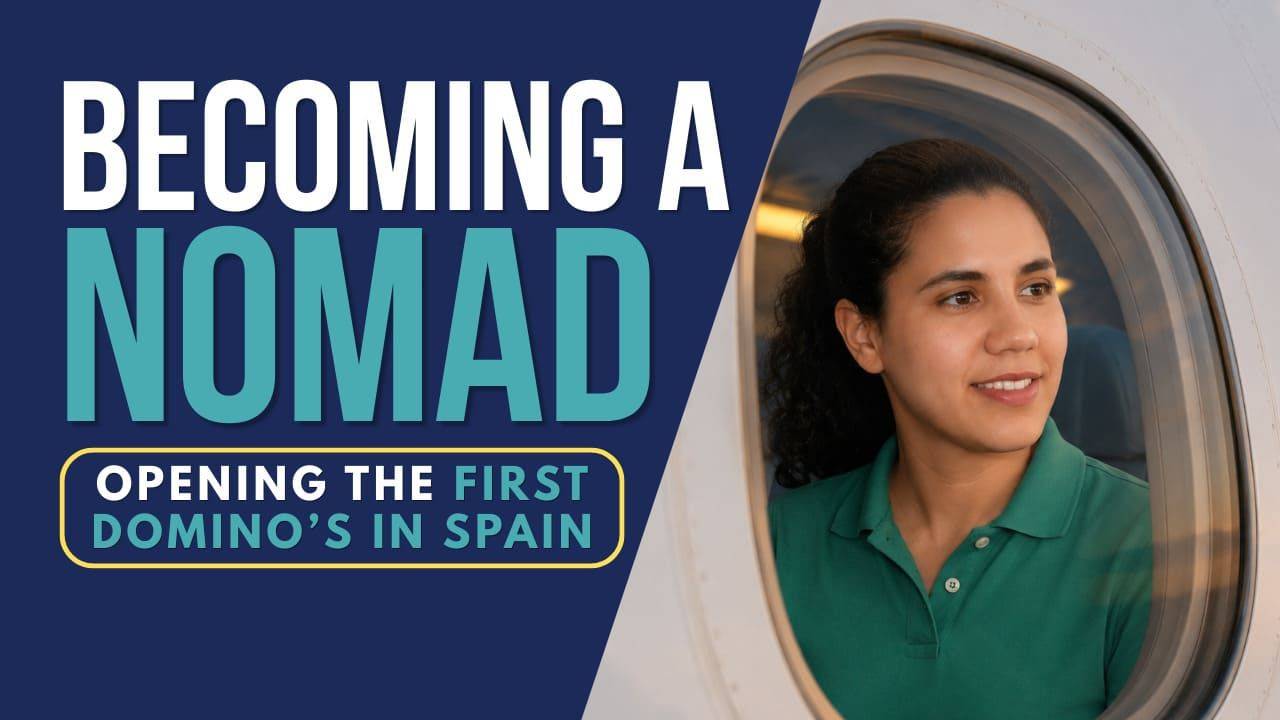
(MY FRANCHISE JOURNEY, PART 4)
Back in early 1992, I didn't have a house, a car, or even a closet, but I was perfectly fine with that. I became a nomad Franchise Executive because I joined Domino's Pizza International, and that chapter of my life brought me exciting new experiences as well as important life and personal lessons.
A friend of mine from corporate recommended that position to me because she thought I was perfect for it! I spoke Spanish (I’m originally from Guatemala), had about a year and a half of experience as a Unit Manager with a good track record, had a passport, and could travel as needed since I was young, single, and didn't have any personal responsibilities.
During that time, the international division was quickly expanding. Since my goal of becoming a Franchisee in Guatemala was no longer possible, I saw this career move as an exciting opportunity. So, I applied for the job.
Please subscribe to our YouTube channel and Podcast, and follow us on our social platforms.
A Nomad Training Specialist
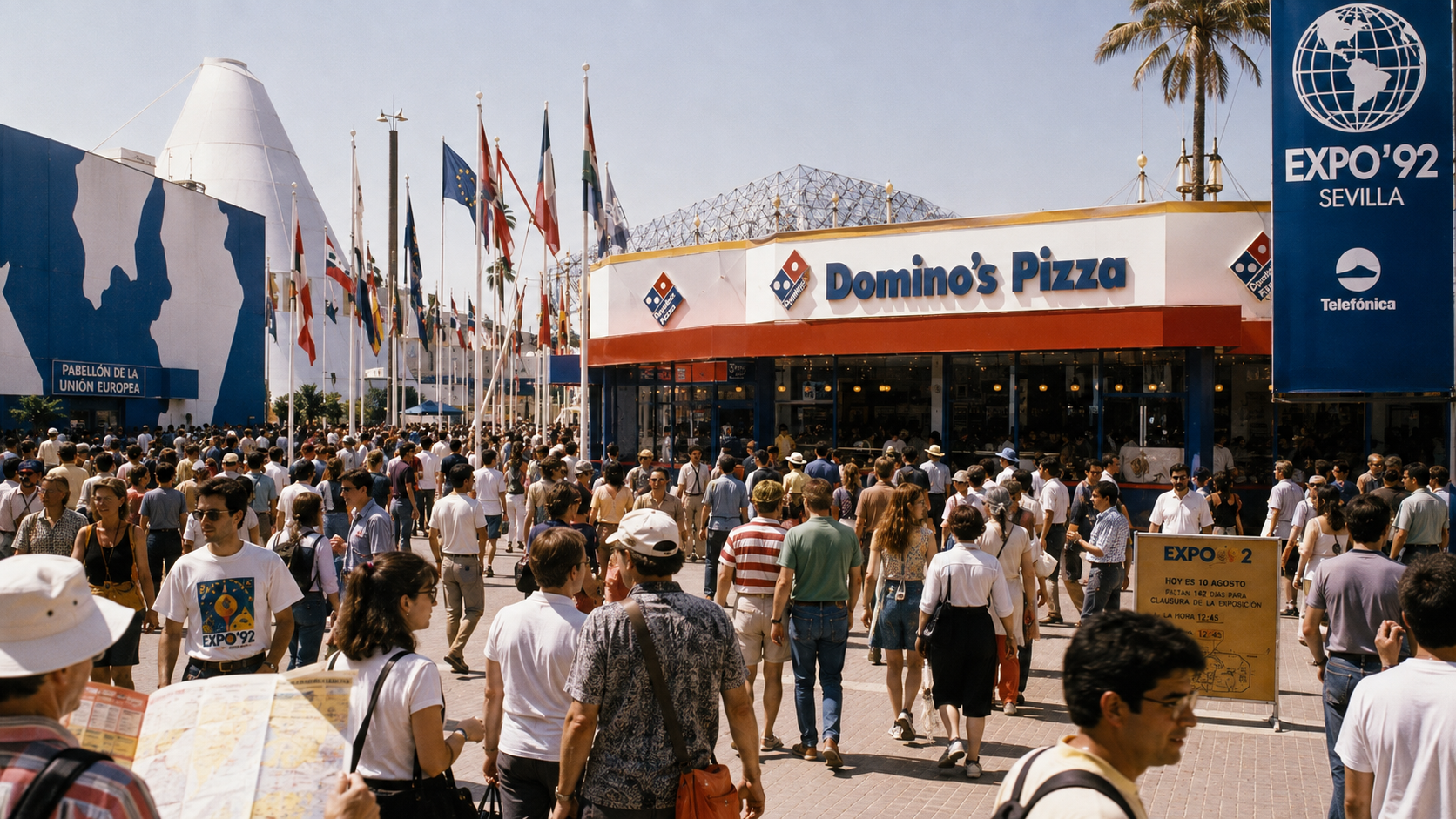
I flew to Michigan for an interview, and six weeks later, I was in Seville, Spain, as part of the team that was opening the first Domino's Pizza in Spain.
My job title was Training Specialist, and as such, I was sent to different countries to help the Master Franchisee define, document, and implement the processes, procedures, standards, and policies that would help the organization improve operations and thrive. I had to do that within the time I was assigned for that country, depending on the specific needs of the Master Franchisee.
Every country was different, and the needs were of all kinds, whether it was training, financial operations, financial profitability, the distribution center, quality control, and a very wide range of other things. So, I truly learned a lot about the franchise business and how every part of the system has to be aligned to work as a well-oiled machine.
One thing that was curious about my job was that my goal was to eliminate the need for my job. I was assigned a specific objective and a time frame to complete it, and I needed to make sure they no longer needed me, or my coaching or guidance, by the time that assignment ended. While it was contradictory, to me that was fantastic.
First Stop: Spain
My first assignment was in Spain. For this one, I wasn't alone; I was part of a team there to open the first Domino's in Spain. We were a large group, including specialists in different areas, because there were many specific needs.
First, this was the first country with overseas operations, so we faced some supply chain challenges. Then, the opening happened during a World Expo, which brought a lot of additional complications. Plus, I wasn’t the only one being trained. Other new Training Specialists were also there to learn the job.
I was in charge of the day-to-day operations. So, once the store was open and everyone left, I was left behind to teach others how to run the daily operations. It could have been intimidating and overwhelming, but to me, it was a truly amazing opportunity.
On the one hand, I really enjoyed that, for the first time in my career, I was managing an international team who was learning everything about Domino’s from scratch. And I was the one teaching them how to implement all the operations, procedures, and standards I had learned intimately as a manager running operations for three different stores.
My job was to pass on all this knowledge, all of this training, and all these procedures to a brand-new team from scratch and have them do an amazing job so that the introduction of Domino’s into the country was a success.
On the other hand, the job was at the World Expo, which took place in a place called Isla Cartuja in Sevilla, Spain. They transformed this kind of island into the World Expo, and our customers were basically all the World Expo visitors, so they were always changing.
This brought a lot of brand exposure because people from all over the world were coming to this event. So, we not only introduced Domino’s to Spain but to the world, especially Europe, where the brand hadn't quite penetrated yet.
This was probably one of my longest assignments, because I was there for about six months, which was the length of the World Expo.
Next Stop: Snowy Michigan
After this assignment, I went back to the United States, where I was actually sent to Sault Ste. Marie, a little remote place, in the far northern part of Michigan and into Canada, actually. My assignment there was to help the Franchisee figure out how to be profitable or at least break even in the middle of winter.
Apparently, that Franchisee reached out to headquarters for help because he needed to manage his very low-volume store and keep operating through winter, when everything was covered in snow and no one was around, until spring and summer came and tourism would help him increase sales.
The challenge was completely different from what I had experienced in Spain, where the World Expo automatically brought us high volume and visitors who were eager to try our pizza, and where I had a great big, brand-new team supporting daily operations and learning everything from scratch.
But the store in Sault Ste. Marie had been around for a while. The Franchisee was a little old and a little tired, and he needed to figure out how to operate successfully under these hard seasonality conditions. Thankfully, we were able to help him break even (discover how below!)
3rd Stop: US Headquarters
When that assignment was done, I went back to the headquarters, where I had a couple of really interesting experiences.
Part of my job on the International team was to help train Master Franchisees who were getting ready to open the brand-new unit in their countries. But some of these Franchisees couldn't spend three or four weeks with us at the US headquarters, so we developed what we called the Pizza Prep School.
This was a very accelerated, intense training program for Master Franchisees, where these men and women learned all the operations and standards, and how to run a store by themselves, in just two weeks.
I’m proud to say that model was eventually used to train executive team members for Domino's Pizza at headquarters, and it's still operating to this day, as far as I understand.
Because of this program, I learned how to execute and deliver intense training where people could get all the information they needed in a short period of time (something I definitely applied when I created our AFA Programs). We would give them the theory and book knowledge during the day and run operations in the afternoon so they could implement what they learned and get the experience they needed to run the unit successfully.
It was late January 1993, and that year, the Cowboys won the Super Bowl, which was super fun because, as you may recall from this previous blog post, my first job at Domino’s was in Dallas. After this, around mid-year, we had the worst news for Domino's Pizza, but more about that in the next blog post.
Keep learning: Training Is Expensive! But Lack of it Costs More
Business Lessons from a Nomad Franchise Executive
To this day, it amazes me how intense and interesting my first year at Domino’s International was. I was exposed to many different challenges that taught me many lessons for when you open in a new country, or really, a new unit wherever it is located.
These are the lessons that stuck with me from my first year as a nomad franchise executive:
The Standards you Set Will Stay
When we were in Spain, we spent a lot of time and great detail training the team members to make sure they understood not just the theory and the standards of operations, but the why behind those standards. It was critical, as these team members were the future of the brand in that country.
I learned that, when you have an opening, whether it's a pizza store, a car wash, or a gym, that’s the first time that community is exposed to that brand firsthand, directly in their neighborhood. And your standards as a Franchise Owner will be what your customers will see as the standard of the brand.
That's something my boss from back then taught me: who I was as a leader and what I did would mark the rest of that brand in that country.
That is true for any new unit, whether it's in the United States or any other country. Because while people may already know something about the brand, the moment they are directly exposed to it and the employees are first brought into the organization, the standards you establish will set the tone for that brand experience for the rest of its existence there.
And when it comes to team members, I also learned that everyone who works for you will initially have lower standards than yours. It's very rare to see an employee with higher standards than those of the leader. So, as a Franchise Owner, it's your responsibility to help them raise their standards to meet the high level of excellence the brand requires.
The Importance of Culture
When I was in Spain, I wanted to make sure I built the kind of culture I was used to creating with my team back in the United States. If you remember from my previous blog post, that was one of the things that helped me be successful as a manager. So I made a real effort to build a positive team environment and make them feel they were part of something truly special.
From time to time, to celebrate a good week or thank them for their hard work, I took the team across the street from the World Expo to a church called the Basilica de Santísimo Cristo, where they sold churros and hot chocolate after closing.
That little night gathering didn’t cost much, and yet it helped me create an environment of trust and loyalty, and a sense of connection and teamwork, which ultimately is why we were so successful in that unit.
I truly believe that if your people are happy and honored to be part of your team, they will go above and beyond for you as a leader and won’t want to leave that organization.
Running on Survival Mode
The Sault Ste. Marie location taught me a valuable lesson in operational survival.
As I mentioned, it was a very remote location, and since it was a tourist-based place, during wintertime, when everything was just covered in snow, only the locals were left behind. So being able to break even, or at least keep costs to a minimum, was critical for their survival until things started to thaw out and tourists came back.
To really minimize losses, we changed operating hours, adjusted labor costs, and created very, very smart offers, among several other strategies. By the time I left, that unit was running at break-even.
Interestingly enough, a lot of what I learned during this time is what I implemented with my clients during COVID. That learning that happened back at the end of 92 and early '93 -that tightening of operations for survival- is exactly what I taught our clients during COVID.
Thankfully, none of my clients closed, and everybody was able to overcome those challenging times, regardless of the businesses they were running.
Don’t miss: 6 Key Financial Insights for Multi-Unit Franchisees
Embracing the New Location
Another thing I learned as a nomad working for Domino’s International was that once you get to a new market or country, you have to settle in immediately to truly make the new place feel like your home, whether you are there for a month or two or three. Otherwise, you’ll struggle trying to adjust.
To do that, within the first two days I did three things: first, I completely unpacked whatever I had in my suitcases so that everything was in my drawers. Then, I went out and found a bank and a grocery store. Then, I explored the neighborhood and surroundings.
Spending the first couple of days doing that helped me get settled so I could focus on my job and assignment.
Those are the lessons of my first year as a nomad Franchise Executive, but there is a lot more coming! Make sure you subscribe to our YouTube channel and join our community to keep track of everything I went through and what I learned as a Franchise Training Specialist and an international nomad helping Master Franchisees around the world.
WATCH THIS CONTENT ON VIDEO:
NOTICE: Our YouTube channel has been hacked and deleted.
We are working with the YouTube Team to get it back.