From CEO to Multi-Unit Franchisee: The Mindset That Changes Everything
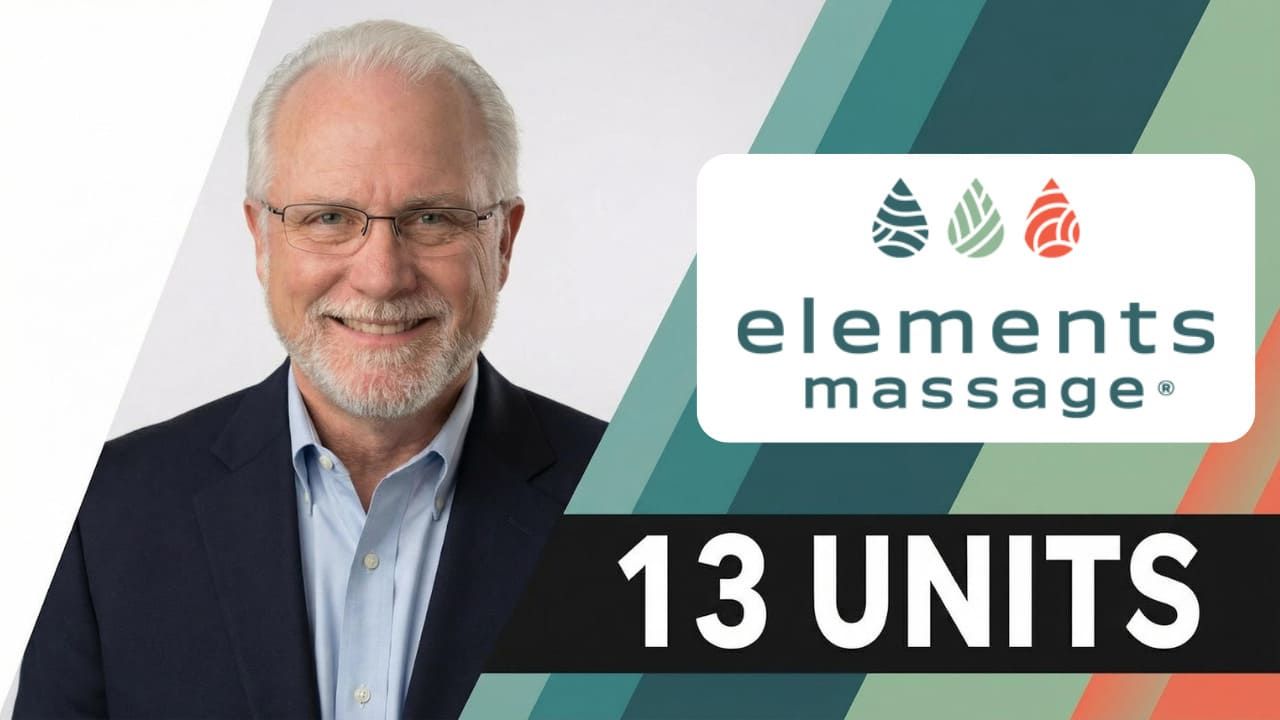
In my latest session of Franchisee Wisdom, the podcast where successful Multi-Unit Franchisees share their franchise journey and all of the knowledge they accumulated along the way, I had the pleasure of chatting with Mike Davis, a Multi-Unit Franchisee from Elements Massage.
He spent much of his professional career as an executive at a grocery store company, eventually becoming CEO, before entering the franchise industry. The corporate lessons from those years have stayed with him to this day and are an active part of his strategy as a franchisee.
Mike has been with this brand for over 15 years and has 13 locations throughout Washington, Idaho, and Oregon. Over the last eight years, two of his studios have held the #1 and #2 positions across the entire franchise system. Because of his outstanding performance, the International Franchise Association (IFA) named him Franchisee of the Year in 2024.
He’s married and has three adult children who are involved in the business. One of them is even part of our COMMAND program, where he’s accelerating his business learning curve as he prepares for the next step and becomes his own leader within the company.
Mike’s franchisee journey exemplifies conscious and strategic growth, offering valuable lessons for aspiring entrepreneurs seeking impactful success. Let's discover his story...
But first, don’t forget to subscribe to our YouTube channel and Podcast, and follow us on our social platforms.
A Unique CEO Perspective
Like many franchisees, Mike's franchise journey began with a strong background in the corporate world.
First, he worked as a CPA at a major international accounting firm. Then, he worked for 22 years at a privately owned grocery company, where he served as CFO, COO, and eventually, CEO. In all those years, the company grew from 300 employees and seven locations to 2,400 employees and 24 units across four states.
Those corporate years helped him transition from a financial to an operational mindset, and he also gained exposure across functional areas, including marketing, procurement, and HR.
For example, one of the biggest problems of their grocery stores was with bananas going bad and being left out on the counter. Mike decided to invest a month learning everything in the supply chain that could affect bananas before they arrived at the stores, and worked with their suppliers to make changes that fixed those issues.
“It really satisfied my curiosity. I spent a lot of time in the stores trying to understand the problems the employees face, how they make decisions, and what information I could provide them to help them improve their decision-making. I got really engaged in how the business operated.”
This approach made employees see him as a problem-solver, someone who truly cared about their everyday issues and would try to get them fixed, not just give excuses as to why they happen.
He also made an effort to help employees truly understand their impact on the business results, at their level of knowledge and skills.
“Most operators don't have financial sophistication. And so, if all I did was talk to them about P&Ls and line items, they wouldn't be able to translate that into different behavior or decisions in the business. I focused on understanding the key drivers behind those numbers, so I could talk with them at that level and help them see the actions they should take to improve those drivers rather than just telling them about expenses or line items.”
I always say that the financial statements are just the report card of what happens every day in operations. To really understand what these documents are saying, you need to go to the units and the front lines to see what’s happening and causing those results.
So, I really liked Mike’s perspective and willingness to get into the weeds, which, to be honest, is not that common, especially among financial leaders. I also applaud him for using his knowledge to support their people and provide employees with feedback on how they could improve. That's unique!
A Franchisee With Purpose
When the grocery owners sold all the stores, Mike went into entrepreneur mode. He started his first business, a firm that provided specialized services to commercial building owners. Five years passed, and although they were great, he recognized that what he had was a job, and he wasn't passionate about it.
“I was working from home by myself, and not with a team. I missed that. I also thought: I'm in my early 50s now, I want something that's not just gonna be a job and a financial success, but something that would give me a purpose and provide joy in my last legs of my working career.”
He spent about a year and a half studying various franchise opportunities, determining three criteria for his selection:
- Whatever he did, it had to be something he truly believed in.
- It had to be something that would make a difference in the quality of life for people.
- He wanted to work with people and personality types he enjoyed being around.
Being a finance guy, he was very diligent and prudent in his selection, and he took his time to analyze and choose the right franchise brand and to talk with other owners.
Out of all his options, he kept coming back to the Elements Massage franchise, feeling that even though on paper it wasn’t the most profitable, this brand met all of his non-negotiables. He was actually a client of this brand, and he had experienced the benefits of their services firsthand.
“Back in my grocery days, we covered a wide geography, and every other week, I had to drive 2,000 miles to spend time in all the operations, and so my body was taking a beating. A chiropractor introduced me to the benefits of massages, and when Elements opened in my hometown, I gave it a shot and began to see better and better results in my health!”
Another thing that attracted Mike to this brand was that, back then, it was not a highly established franchise that would give him a rulebook of everything he had to do. He wanted to invest in an emerging franchise brand that would allow him to be curious, explore, understand, and learn on his own.
He even helped the franchisor test and define some of the brand parameters, and in his early years, he became part of the advisory council.
“I'm not interested in telling them what to do, but I am excited to point out pure potential opportunities in areas that need to be explored. And the current management team is highly engaged with the Franchise Advisory Council. Really, nothing of significance occurs without getting input.”
Multi-Unit Growth with Attention and Intention
When Mike joined the franchise brand in 2011, it had around 70 units. Now, the count is just under 300. Of them, he currently owns 13 units across three states.
His first unit was located in a trade area about 180 miles from his home, so he rented a very cheap apartment nearby, with just a mattress on the floor, to save time and be present at the business six days a week. “I'd come home usually one day every other week just to see my wife”, he confessed.
He also decided to mirror his experience at the grocery stores and get fully engaged in operations for the first six months, from open to close, so he could understand every element of his new business, set standards, and go through all the operating systems and processes.
“Yes, I was going to have staff and employees, but I wanted to comprehend what motivated a client and what was important to them. We open seven days a week, 12 to 14 hours a day, so how does all that work? And then, how do you layer marketing?”
That first location had the best opening in the brand's history, and to this day, it has the best membership growth numbers ever. However, success doesn’t happen by accident, and I believe part of it is due to Mike’s involvement. He was present, taking care of his business and attending the front desk when new members came in, so he could get to know them, listen to what they had to say, and share his story to connect.
The good experience with his first studio encouraged Mike to open his second location about a year and a half later, in a different market but only 50 miles from his house. Exactly a year later, he finally acquired an existing location in his home market.
This third unit was struggling so much that the studio ranked in the bottom 1% of the system. But thanks to his commitment, hard work, and strategic mindset, he was able to turn it around. Today, that’s the #2 location in the system, and his youngest son, a massage therapist who has been working for the company for 12 years, manages that studio.
After that acquisition, Mike bought an individual studio in the Seattle market, the farthest from his hometown. By then, he had promoted one of his managers, a woman who had been with him from the very beginning, to Operations Manager and made her responsible for all the studios.
Over a year and a half, he purchased a couple of other studios from individual owners, one at a time. That timing was part of his strategy as it allowed him and the Ops Manager to learn how to wire up and adapt to multi-unit operations and effectively implement the culture with the new employees.
Mike made a big jump in 2024, when he acquired six additional locations from a single operator, bringing his total to 12 units. He added the 13th studio about a year ago and revealed that, in the near future, there will be around eight more locations, with a mix of new build-out studios and acquisitions.
I really applaud how Mike has grown slowly but surely while also ensuring he maintains the company culture and values. This evolution is critical for multi-unit franchisees who are in growth mode, because the routines and processes need to adjust, even if it's little by little, as you add another unit to the company. That will allow you to go into the next one better prepared and better equipped for success.
Slow Hiring and Good Culture Fit
Mike not only made an effort to connect with his customers, but also understood that he needed to connect with his employees to ensure they were aligned with his company culture. However, he did not comprehend this the easy way.
When he opened his first studio, he thought that it was enough for a therapist to have a license and to give good massages to be hired. “After the first three months, I realized I was a really, really crappy at hiring. I had chaos, turnover, conflicts, and everything you could imagine associated with that.”
It wasn’t a minor issue, as their product was built by a combination of their people and the service they provided to their customers. He needed to find therapists who shared his “why” and who wanted to become part of who they aspired to be as a company. This would help him create the user experience and culture he was building, one based on safety and trust.
To overcome this critical challenge, he turned to what had worked in his grocery days: be curious and inquisitive.
“I needed to go down deep and understand why they choose this profession. So, with every new therapist who has been with us for 90 days, I would go to their office and just ask questions, trying to understand their 'why's'. I did it that way to be less intimidating, putting myself in a vulnerable position while receiving their treatment. What I learned is that with our greatest therapists, there was tremendous alignment between my why and their 'why's'. Once I began to understand that, all the pieces started to fit.”
When Mike’s business began to scale, it became much harder to replicate this strategy because he couldn’t have these one-on-one conversations anymore. So, he developed a hiring process for the managers and lead therapists who do the hiring, so they could learn how to identify the ideal therapist’s attributes during the interview process and what language to use to obtain better insights.
He totally nailed this. Training your people in your business systems and processes is the best way to ensure they not only know how to perform the actions but also understand the thinking, feeling, and attitude behind them.
- Finding the people who possess not only the skills but also the desire to go beyond just step one, step two, and step three of the processes is vital to any business, regardless of its industry.
A Compass to Stay in Alignment
Once Mike understood his 'why' and their employees' 'why', he found the company’s 'why'. This vital element, he says, helps him ensure that all major decisions are aligned, whether it's who to hire, their compensation structures, their professional development investments, the KPIs for every therapist and every front desk staff member, etc.
And, he confessed that every time they have had a problem, he later realized that it was because they’ve made a decision that pulled them out of alignment.
“For example, sometimes it's easy to cut a cost. But if it moves me out of alignment with my 'why', I'm gonna get turnover, and if I get turnover, the clients who have built a relationship with us, based on safety or trust with their therapist, are no longer going to be there. They're going to leave.”
Staying in alignment requires Mike to do things differently. For example, he shared that he found a way to communicate with his employees and staff so that the numbers wouldn't be intimidating.
“I always tell them: Numbers are neither good nor bad; they simply tell the story. Our job is to provide them insight into what the story is telling about the health, stability, and scope of their practice, so they can adjust what needs to be adjusted and achieve what they want from this profession with us.”
I love that Mike lives by his values and makes sure all his major decisions and actions are aligned with them, because ultimately, that’s what ties him to his therapist and customers.
- When all of these elements come together, they build an amazing culture and experience not just for him, but also for his customers and team members every day.
This compass is also helping Mike through the succession process, as he prepares to have less and less involvement in the business. Even though he still loves it and is engaged in it seven days a week, he is working with the key decision-makers to ensure not only that they are prepared to carry the company forward, but also that their decisions align with the 'why' and the culture he created.
“I'm making sure that they know that their decisions will impact over 400 families. I’m giving them the understanding that it's not about them; it's about what it means for the business. That way, they can make the best decisions as I kind of recede away from involvement.”
Don’t miss part 2 of this interview, where Mike will share the best practices behind his acquisition strategy for growth.
WATCH THIS PODCAST INTERVIEW ON VIDEO: