Proven Acquisition Strategies for Multi-Unit Growth
Apr 22, 2026
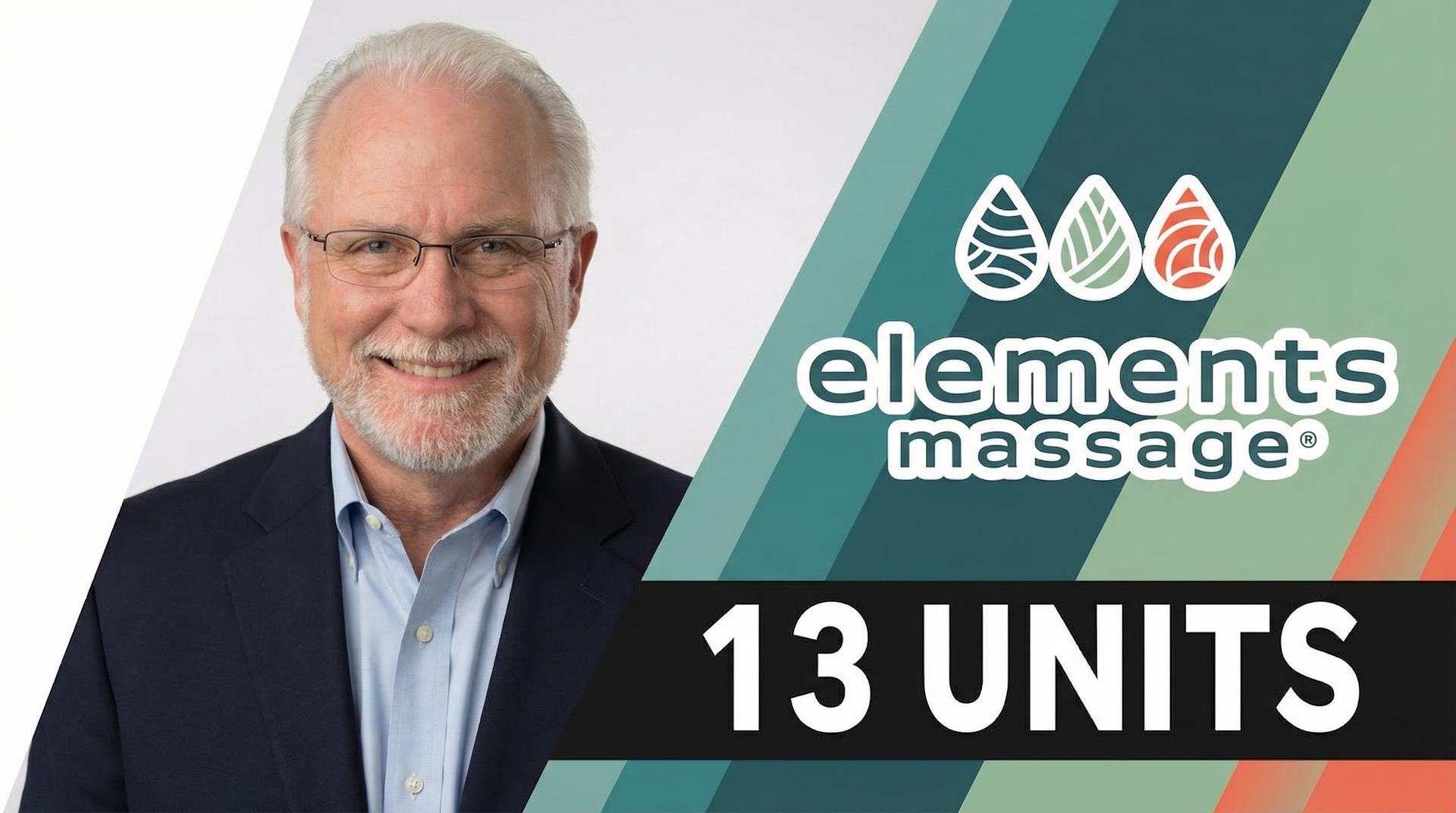
Mike Davis from Elements Massage was our guest on the Franchisee Wisdom Podcast, where we interview successful Multi-Unit Franchisees and share their journeys, experiences, and the lessons that brought them to where they are today.
He currently owns 13 locations throughout Washington, Idaho, and Oregon; two of them are ranked #1 and #2 across the entire franchise system. Even though he’s entering the succession process, he’s also planning to add eight more locations to his organization in the near future.
In the first part of this blog post, we learned about Mike’s initial journey into franchising and how he used his experience as a former CEO to build a solid franchise business grounded in a strong, positive culture and a compass to stay aligned with the “whys” behind the business.
In this second part, we’ll go over the growth strategy Mike followed to slowly but surely reach 13 units, as well as his best practices and proven acquisition strategies for multi-unit growth.
But first, don’t forget to subscribe to our YouTube channel and Podcast, and follow us on our social platforms.
A Story of Growth Through Acquisitions
Mike has been with the Elements Massage brand for over 15 years. His first studio opened in 2011, and over the years, he added five more locations, mainly through an acquisition strategy.
He made a big jump in 2024, when he acquired six locations from a single operator. He added the 13th studio in 2025, and the future eight units will come through a mix of new-build studios and acquisitions.
His growth strategy, based on an acquisition strategy, has been very successful so far. So much so that, as of today, he still owns all of them. All he has done is relocate, expand, or remodel them. Plus, all of his studios are profitable.
Having a financial background has definitely helped Mike evaluate whether or not to acquire an existing unit. He has a degree in accounting and worked as a CPA at a major international accounting firm. Then, he spent 22 years at a privately owned grocery company, serving as CFO, COO, and eventually, CEO.
But more importantly, he believes that “numbers are neither good nor bad; they simply tell a story”. And so, as a business owner, part of his job is to reveal what the story is telling about a business's health, stability, and scope, so he can adjust what needs to be adjusted and achieve his goals.
If you missed part 1 of our conversation, click below to read Mike Davis' Multi-Unit success journey:
From Multi-Unit Leader to Enterprise Owner
Before he could take on acquisitions, Mike understood he needed to prepare himself to scale his company this way. “The worst thing I could do was to grow big and then change how I function”, he explained.
One of the things he did to prepare for his first acquisition, which would later become his third location, was to promote a team member to General Manager so he could begin delegating daily operations to her. Mike’s youngest son and his daughter also took on strategic roles to manage specific parts of the growing company on his behalf so that he could focus more on strategy. By the time he got to the sixth location, his middle son had also joined as a Business Manager.
Once he reached that stage, he began actively seeking opportunities.
Mike did it the right way. As you grow, your routines and processes have to evolve little by little so you can really get to know the business and do very well. He did that and built a good reputation as a great operator, even though he was small, to the point that people who wanted to sell started approaching him with acquisition or franchise resale offers.
Don’t miss: How to Stop Working IN your Franchise and Start Working ON It
Effective Turn-Arounds
While acquisitions or franchise resales are a great strategy to go multi-unit faster than with new build-outs, Franchisees have to consider that the locations that are for sale may not be at their best, whether it’s because of the financials, the market, the teams, their systems, neglect, or a combination of all of these issues.
It happened to Mike. When he acquired his first studio, which ultimately became his third unit, the location was struggling so much that it ranked in the bottom 1% of the entire franchise system. However, he was able to turn it around thanks to his commitment, hard work, and the strategic mindset he shared with us in the first part of this blog. (Did you miss it? Click here to read about it!)
That previous experience helped him when he bought six studios in a bundle. The units had faced various issues over the past few years, but Mike recognized an opportunity and chose to bring them into his company. He is currently focused on addressing these problems and turning the studios around.
It’s interesting to note that Mike has never used debt to grow. “I was never motivated by how much money I needed to make or how big I had to be. Could I have grown much faster? Probably. But I was unwilling to take on debt to do it. Because of my stage of life, I'm risk-averse.”
Where did his money go, then? He mainly reinvested it in remodels, relocations, and expansions.
“I came to realize that the original two facilities I had built were under an old format, and they were poorly designed. So we reinvested in relocating them into larger facilities, and since eight years ago, they have been ranked as the #1 and #2 studios in the system.”
Bring People into the Culture
As explained in part 1 of this interview, Mike’s company has a strong foundation in values, culture, and people. So, of course, part of his strategy to turn around underperforming units involves bringing his culture and his way of doing business into the new acquisitions, to make them become part of the family.
This is key in the acquisition process because those units usually come with existing team members, unit leaders, and even District Managers who oversee these locations, if acquired as a package, as Mike did when he added six studios simultaneously. “They also had an HR director, which is something I had been desperately looking for”.
As he explained, he sees the acquisition process in three different stages.
- The first stage is to do the introduction. “You wanna begin by explaining your ‘why’. I spent a lot of time meeting with the staff to explain our ‘whys’, and let them know that yes, things will change, but here's why they will change, and this is the purpose behind it”, he explained. “Of course, that's a slow process”.
- The second stage is to have the Managers on board. “The most important thing is to get a sense of the managers really quickly and see if they are going to embrace your ‘why’. Ultimately, they will be the ones representing you with the staff because you and your general manager can't be in all the units”.
- The third stage is to develop a Manager bench. This is critical if, during the second stage, you end up realizing that some Unit Managers, or District Managers, if that’s the case, are not the greatest fit for your company. This process will help you identify who the real talent is in those locations.
“We’re constantly building our bench within our existing units so that we can have talent to turn to. We find talent internally and then develop it. Thanks to this, today we have managers in all of our locations, and we have yet to have to go outside the organization to bring someone in.”
How can you tell who the rising stars are? Mike and his team have identified five simple yet key characteristics they look for in their future leaders:
- Are they curious?
- Are they engaged with the staff, the location, and the business?
- Are they problem solvers?
- Do they have a sense of urgency?
- And, are they competitive?
“We're highly, highly competitive in a fun way. We love winning. We love having success. And we want people who have that kind of drive”, he explained.
Having this defined when they took on the six studios helped Mike quickly identify who was a great fit for his bench, so they could start developing and training them to grow within the company.
I love Mike’s commitment to promoting from within because I truly believe it increases the chances of success over external hiring. Plus, it inspires and motivates others, even those who don't want to move up, because providing growth opportunities for your people shows you care about them and their future.
In case you missed it: Internal vs. External Hiring in Franchising. 5 Factors to Consider
The Next Stage
Acquisition opportunities keep knocking on Mike’s door. However, he’s now starting to see them from a different perspective as his role at the company evolves once again. “It’s the next natural step because I'm about to turn 68,” he explained.
For the last few years, he’s been working alongside the other key decision-makers across the business to ensure they're prepared to carry the company forward and make the best decisions aligned with the ‘why’ and the culture, as he recedes from involvement.
“In the near future, we'll probably build out a couple of new locations to infill our existing market. I'm doing that evaluation now. I plan to take my son, who's our Business Manager, through that process from start to finish so he learns that lesson. Additionally, we’re expecting a six-unit acquisition within the next two years. And again, I’ll take the entire team through that so that they know how to execute it. At that point, I will probably disengage.”
To be able to step away with confidence and ensure his legacy endures, Mike made another smart move. He enrolled his son in our COMMAND Program, a Multi-Unit Ownership Certification Program for growing Multi-Unit Franchisees, to help him get prepared for the next step and become his own leader within the company.
“My son wants to do the right things, and he wants us to be successful. He's driven by that. But he's not had enough exposure. And I can tell him things, but I don't want him looking over his shoulder to see what his dad has to say.”
“I like that this will expose him to an outside party that has other experience, shares similar thinking, and I think it will give him opportunities. I hope that the family takes the company down the road to places within our brand that no one ever contemplated.”
WATCH THIS PODCAST INTERVIEW ON VIDEO: